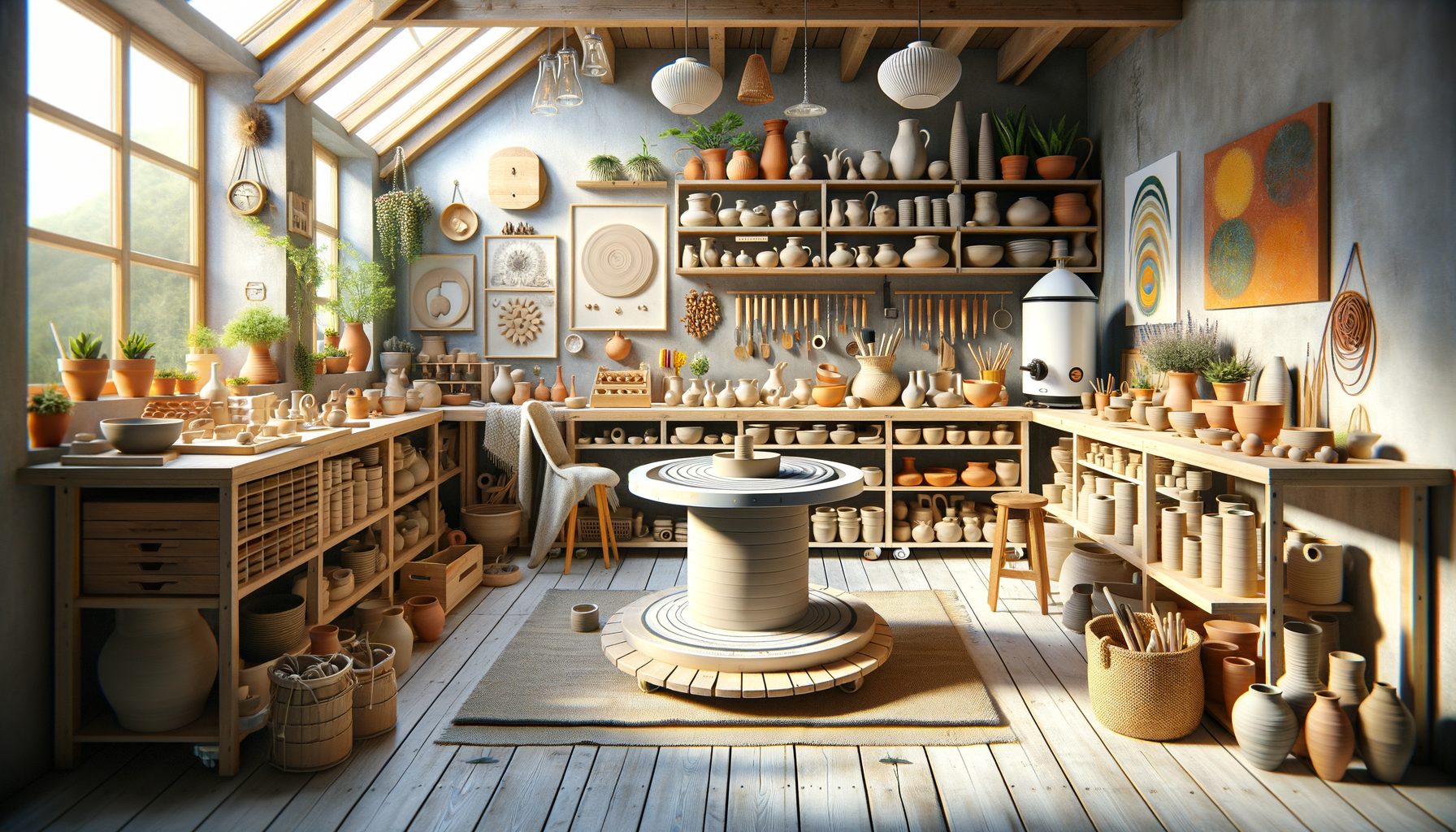
Creating Your Ideal Home Pottery Studio
Transforming a space in your home into a pottery studio can be both fulfilling and inspiring. Whether you’re a seasoned artist or a beginner, setting up the right environment is crucial for fostering creativity and productivity.
Choosing the Perfect Space
Selecting the right location is the first step. Consider areas with ample natural light and good ventilation. An unused garage, basement, or spare room can serve as an excellent base.
Key Considerations:
- Space: Ensure enough room for your worktable, shelves, and equipment.
- Lighting: Natural light enhances the workspace atmosphere.
- Ventilation: Essential for kiln operations and clay drying.
Essential Equipment
Outfitting your studio with the right tools is vital. Here’s a list to get you started:
- Pottery Wheel: For shaping clay with precision.
- Worktables: Sturdy surfaces for hand-building and glazing.
- Kiln: Necessary for firing your creations.
- Shelving Units: To store tools, clay, and finished pieces.
- Ventilation System: Keeps the air clean and safe.
“A well-organized studio not only boosts productivity but also sparks creativity.”
Organizing Your Studio
Efficiency in your workspace can significantly enhance your pottery sessions. Consider the following organization tips:
- Zoning: Create specific areas for different tasks like wheel throwing, hand-building, and glazing.
- Storage Solutions: Use shelves and cabinets to keep materials and tools within easy reach.
- Cable Management: Keep electrical cords tidy to avoid accidents and maintain aesthetics.
Incorporating Personal Touches
Your studio should reflect your personal style and inspire creativity. Here are some ideas:
- Decor: Add artwork, plants, or colorful accents to make the space inviting.
- Comfort: Invest in a comfortable chair and ensure proper lighting to reduce fatigue.
- Inspiration Board: Display sketches, color swatches, or favorite pottery pieces for motivation.
Maintaining Your Studio
Keeping your studio clean and organized is essential for ongoing productivity. Regular maintenance practices include:
- Cleaning tools and equipment after each use.
- Organizing supplies weekly to prevent clutter buildup.
- Inspecting equipment regularly to ensure everything is in working order.
“A tidy workspace leads to a tidy mind, fostering better artistic outcomes.”
Final Thoughts
Setting up a home pottery studio requires thoughtful planning and organization. By choosing the right space, equipping it with essential tools, and adding personal touches, you can create an inspiring environment that nurtures your pottery skills and creativity.