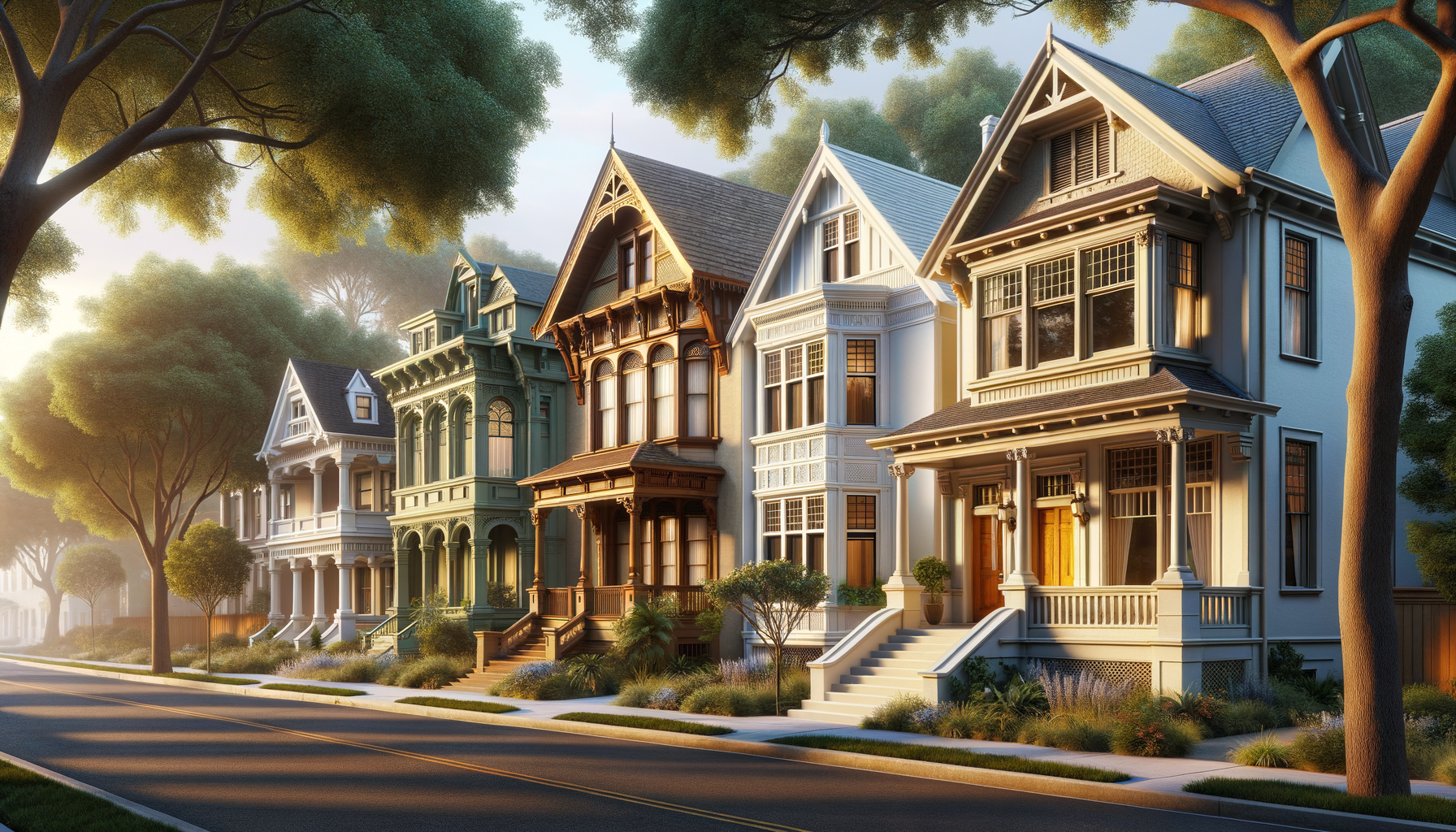
Historic Homes: A Living Legacy
Historic homes blend architectural artistry with cultural memory, offering a unique glimpse into past eras. Whether you’re captivated by ornate details or handcrafted timber, these residences tell stories that modern builds simply can’t match.
Top Types of Historic Homes
- Colonial Revival: Symmetrical façades, central entrances, and classical columns.
- Victorian: Intricate woodwork, asymmetrical shapes, and vibrant color palettes.
- Craftsman: Emphasis on natural materials, exposed beams, and handcrafted built-ins.
- Tudor: Steeply pitched roofs, decorative half-timbering, and tall, narrow windows.
- Spanish Colonial: Stucco walls, red-tiled roofs, and arched corridors.
Colonial Revival
Era: Late 19th to mid-20th century. These homes echo early American symmetry with modern comforts. Features include double-hung windows and decorative shutters.
Victorian
Era: Mid- to late-1800s. Recognizable for gingerbread trim, wraparound porches, and varied rooflines. Perfect for those who love ornate details.
Craftsman
Era: Early 1900s. Celebrates simplicity and craftsmanship with low-pitched roofs, wide porches, and built-in cabinetry.
Tudor
Era: 1920s–1930s. Offers storybook charm through steep gables, stone or brickwork, and leaded-glass windows.
Spanish Colonial
Era: 1915–1940. Brings Mediterranean flair via red tile, wrought-iron details, and interior courtyards.
Buying & Preserving Tips
- Inspect for structural issues: foundation cracks, roof leaks, and outdated wiring.
- Check historical registry rules to ensure acceptable renovations.
- Budget for maintenance—historic windows and original hardwood may need special care.
- Work with preservation experts or local heritage societies.
- Blend modern upgrades (HVAC, insulation) while preserving character.
Fact: Nearly 20% of U.S. housing stock predates 1940, reflecting an enduring love for heritage properties.
Final Thoughts
Historic homes are more than structures—they’re living museums. With thoughtful research and professional guidance, you can preserve their legacy while enjoying modern comforts. Embrace the past as you create your future.