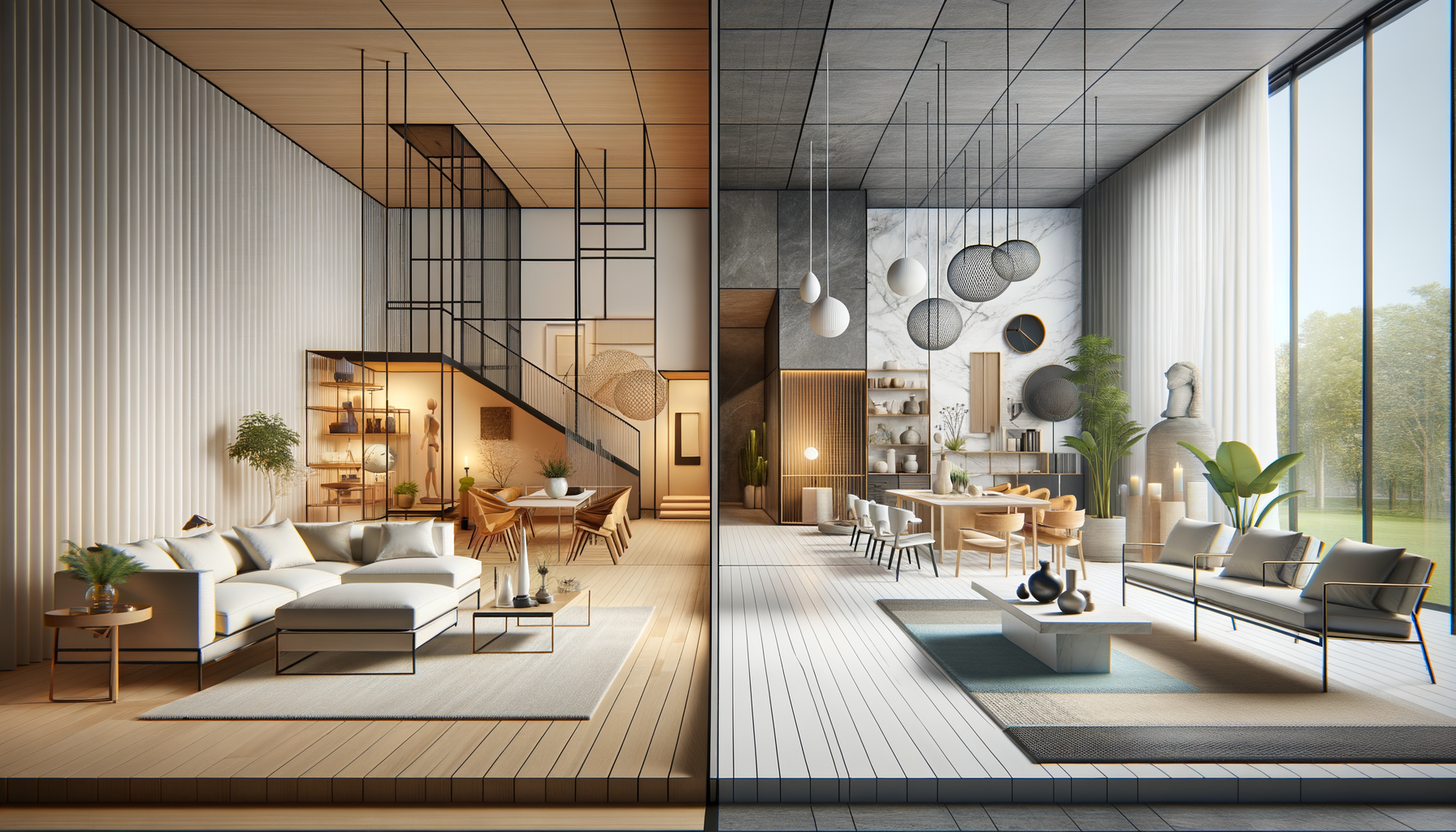
Understanding Modern vs Contemporary Home Designs
When it comes to home design, the terms modern and contemporary are often used interchangeably. However, they represent distinct styles with their own unique characteristics.
Modern Design: Classic and Timeless
Modern design originated in the early to mid-20th century, focusing on simplicity, functionality, and minimalism. Key elements include:
- Clean Lines: Straight lines and simple forms dominate the structure.
- Natural Materials: Use of wood, metal, and glass creates a warm yet sleek look.
- Neutral Colors: A palette of whites, blacks, and grays with occasional bold accents.
Contemporary Design: Evolving and Dynamic
Contemporary design reflects current trends and is ever-evolving. It blends various styles, often incorporating elements from modern, industrial, and even eclectic designs. Characteristics include:
- Flexibility: Adaptable to changing tastes and new materials.
- Mixed Textures: Combining different materials adds depth and interest.
- Bold Accents: Vibrant colors and statement pieces create focal points.
“Contemporary design is not confined to a particular style but is dynamic and always changing with the times.”
Choosing the Right Style for Your Home
Deciding between modern and contemporary design depends on your personal preferences and lifestyle. Consider the following:
- Consistency: If you prefer a cohesive and timeless look, modern design might be best.
- Variety: If you enjoy flexibility and incorporating the latest trends, contemporary design offers more adaptability.
- Functionality: Both styles prioritize functionality, but modern design leans more towards minimalism.
Final Thoughts
Whether you choose modern or contemporary, both styles offer unique benefits that can enhance your living space. Understanding the differences empowers you to create a home that truly reflects your taste and needs.